With a history as rich as Red River Valley soil, Dakota Specialty Milling has been owned and operated by the Matthaei family for over 50 years. It continues to grow, invest in the community and be forward-thinking in how they operate and serve their customers.
Grains have been a part of Peter Matthaei’s family dating back to 1686 when his family had a bakery in Marburg, Germany. His family’s passion for baking bread continued through generations. He is the fifth generation in the United States running the family companies.
It progressed when his great grandfather, a baker in Tacoma, Washington, worked with Dr. Robert Jackson to cofound Roman Meal Bread in the 1920s. The company set itself apart by focusing on the health benefits of whole-grain and multigrain breads and grew to be one of the largest in the country.
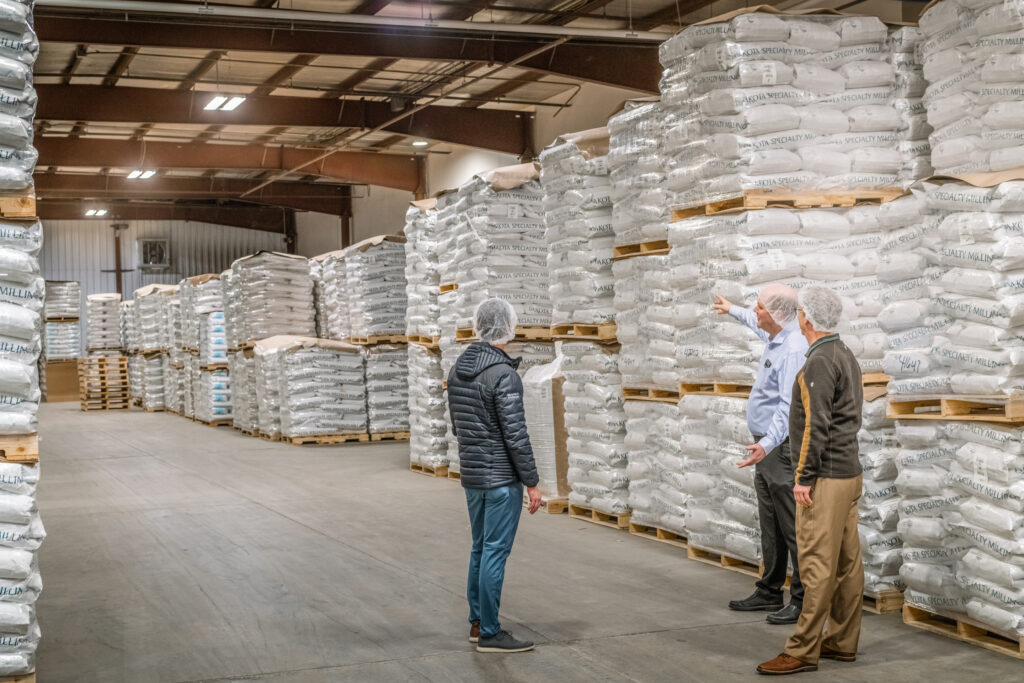
Then in 1969, they built the first mill in Fargo to support Roman Meal Bread. The proximity to North Dakota State University and local producers, including the North Dakota Mill and Elevator, made it an ideal location. Dakota Specialty Milling eventually turned it into the company’s headquarters. Over time, they have gone from baking and licensing to “focusing on milling, blending and toasting for the wholesale bakery, snack food and cereal manufacturers” around the country and to more than 10 other countries internationally.
Pat McShane with Bank Forward said, “The thing that stands out for me with the organization is they are a family-owned business that has been around forever. You can just tell how passionate and knowledgeable Peter is about the business, about the industry as a whole and about what they’re trying to accomplish.” He added, “They’re a big company, but they have a small company feel because they’re family-owned and do things the right way.”
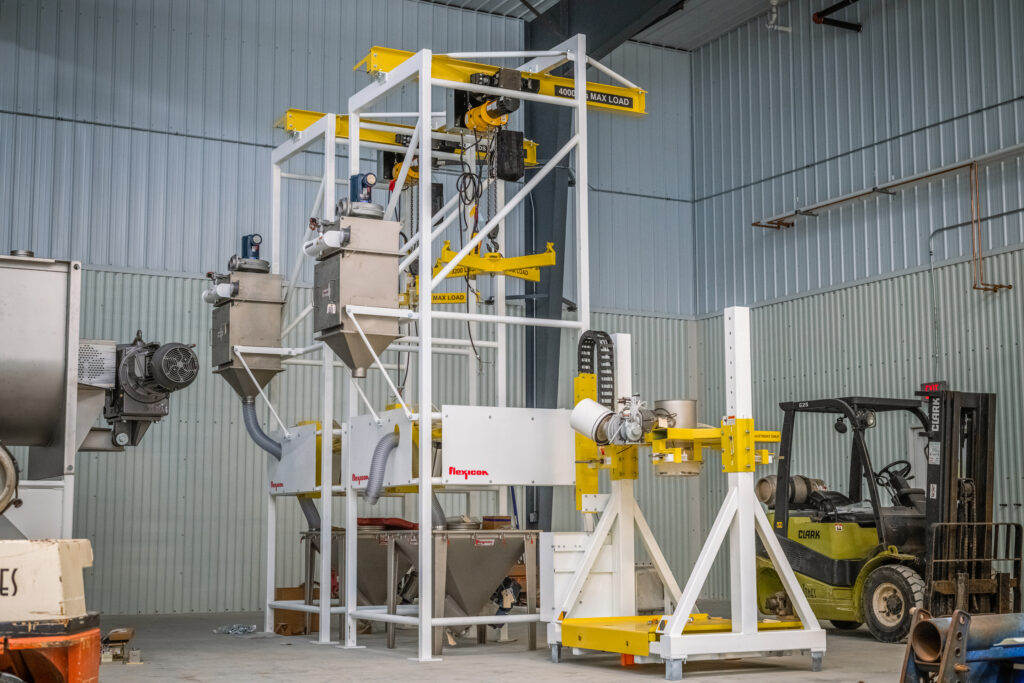
To meet changing customer needs and industry trends, the company continues to invest in their facilities and equipment. In recent years, they added a gluten-free line, completed an overhaul of one of their Fargo mills and are wrapping up an expansion project. The expansion includes replacing and upgrading equipment for their toasting and topping line, adding 40,000 square feet of distribution space and building a new blending line. They will be able to blend baking mixes, concentrates and bases for baked goods along with coatings for fried foods. This previously had been primarily handled at their blending plant in St. Louis, Missouri. With the growth of the business in St. Louis and a large customer demand, it was time to expand that part of the business to Fargo.
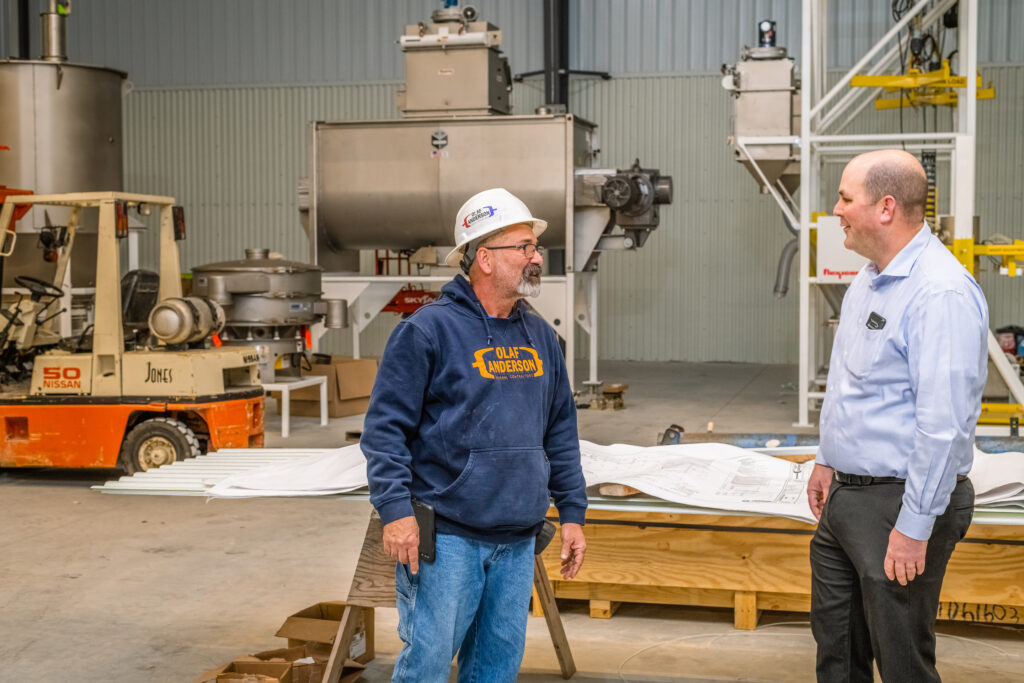
The BND PACE Loan and Agriculture Diversification and Development Fund programs helped finance these projects. For their recent expansion project, Dakota Specialty Milling worked with McShane to develop the financing deal along with Joel Erickson, a BND business banker.
“They were looking at a significant expansion to their distribution facility as well as relocating their commercial toasting oven to a different building. Understanding this was going to be a big undertaking, we began looking at programs that could be utilized to help minimize the impact on cash flow,” McShane said. “Working with Joel at BND, we determined the project was eligible for the PACE program and the new Agriculture Diversification and Development Fund for additional interest buydown.”
Erickson added, “Bank Forward, BND and the Fargo/Moorhead Economic Development Corporation worked closely to assist Dakota Specialty Milling in funding their expansion. BND is proud of our strong relationships with North Dakota financial institutions and communities.”
The additions and upgrades Dakota Specialty Milling invested in will provide more efficiency, safety and automation. Matthaei expressed, “With the current labor challenges, we are excited with our new equipment, that employees will be safer and more efficient with their time at work. Continuing to invest in these areas is critical to our growth moving forward, both in terms of attracting talent and competing on the world stage.”
Dakota Specialty Milling was also able to utilize North Dakota’s Automation Tax Credit. This incentive allows a primary sector business an income tax credit of up to 20% of the cost of the machinery and equipment when it replaces a manual manufacturing process and improves job quality or output.
In the long run, Dakota Specialty Milling’s projects will help them grow their blending and toasting business, be more competitive in the commodity markets and offer a broader range of products. It will be easier for them to overcome capacity constraints and meet customer demands.
Erickson reflected, “Dakota Specialty Milling is a long-standing business in Fargo. This expansion was a perfect fit for the PACE Program and Agriculture Diversification and Development Fund. Not only will these programs help the company finance their expansion with interest buydown, but the increase in plant capacity will also result in the purchase of more agricultural commodities from North Dakota producers. Because of that, the economic impact will be felt beyond the city of Fargo.”