• Skip to primary navigation
  • Skip to main content
  • Skip to primary sidebar
  • Skip to footer
The BND Story Logo

The BND Story

  • BND Stories
  • Overview
  • 1915-1919
  • 1920-1949
  • 1950-1989
  • 1990-2019
  • BND Today

Business Loans

Valence Natural Gas Solutions

Valence Natural Gas Solutions, as its name implies, is on a mission to deliver solutions. Established in 2018, Valence uses forward thinking and advanced technology to help the oil and gas industry create value from natural gas and overcome growing environmental, social, and governance (ESG) pressures. It’s also positioned to help the state of North Dakota meet its goal of being carbon neutral by 2030.


Valence received funding through the state’s Clean Sustainable Energy Authority Loan Fund (CSEA) to build of one of its larger standard flare gas capture facilities along with some of the associated compressed natural gas (CNG) trailers that are used to move the gas around. They worked with First International Bank & Trust and BND to fund additional projects including its next generation smaller scale mobile gas capture units. Valence Natural Gas Solutions President Stewart Wilson said, “It’s awesome to have state level support and programs like CSEA to enable companies like ours to accelerate these technologies to market.”
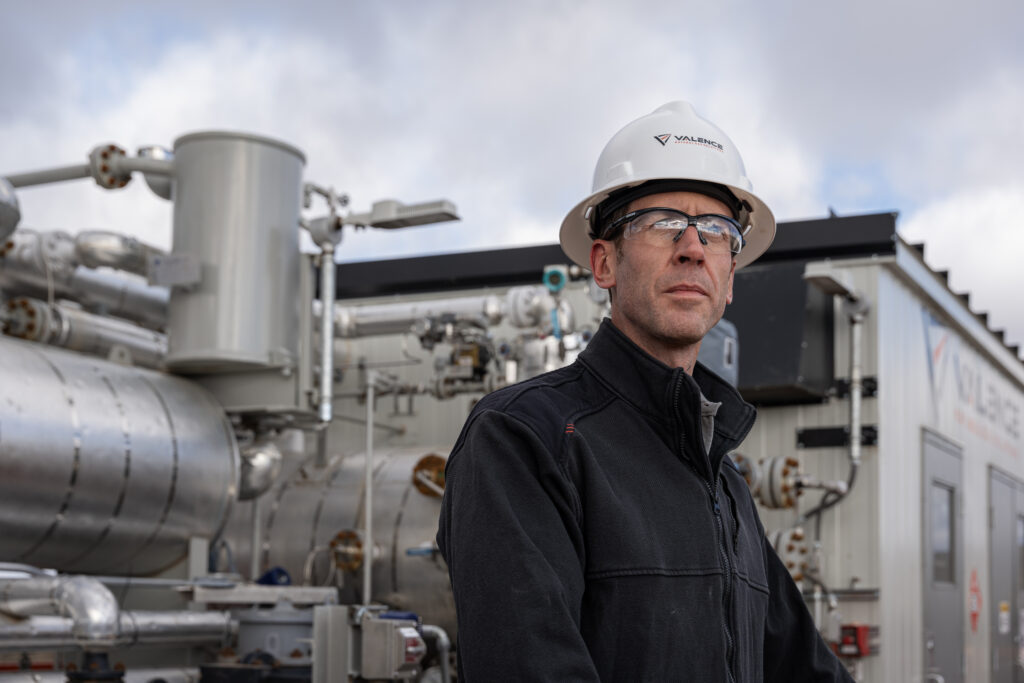

First International Bank & Trust Assistant Vice President and Commercial Loan Officer Brent Schwan, who Valence worked with to fund recent projects, recognizes the impact Valence and its work has for mineral holders and the community. He added, “A lot of the oil and gas producing communities in North Dakota benefit from the gross production tax. If we see a reduction in production and a consequential reduction in that tax, that’s fewer funds coming back to our communities to fund local projects. An example of this is the Rough Rider Center and host of infrastructure in Watford City.”


When it comes to finding and utilizing the right funding programs for businesses, Schwan commented, “Without the ability to finance, a lot of businesses wouldn’t have the ability to expand. I think it’s always important to have the right partners, no matter what venture you’re in.”
“Valence Natural Gas Solutions is a perfect example of state dollars pairing with the private sector to create solutions for our state,” says BND Business Banker Jackie Duke. “Utilizing Clean Sustainable Energy funding designated by the Legislature provides a foundation for them to create and implement this essential technology.”


The Valence story is one of focus and recognizing opportunity. Around 2010, Wilson was working for Ferus Inc. when the company was evaluating how they could convert their transport fleet to run off natural gas instead of diesel. At the time, there existed tractor trucks that could run off liquefied natural gas (LNG), however, the fueling infrastructure to fill them was non-existent. With their background in production and distribution of cryogenic liquids, LNG was a natural extension and the team set off to create the infrastructure needed to fuel this emerging market.
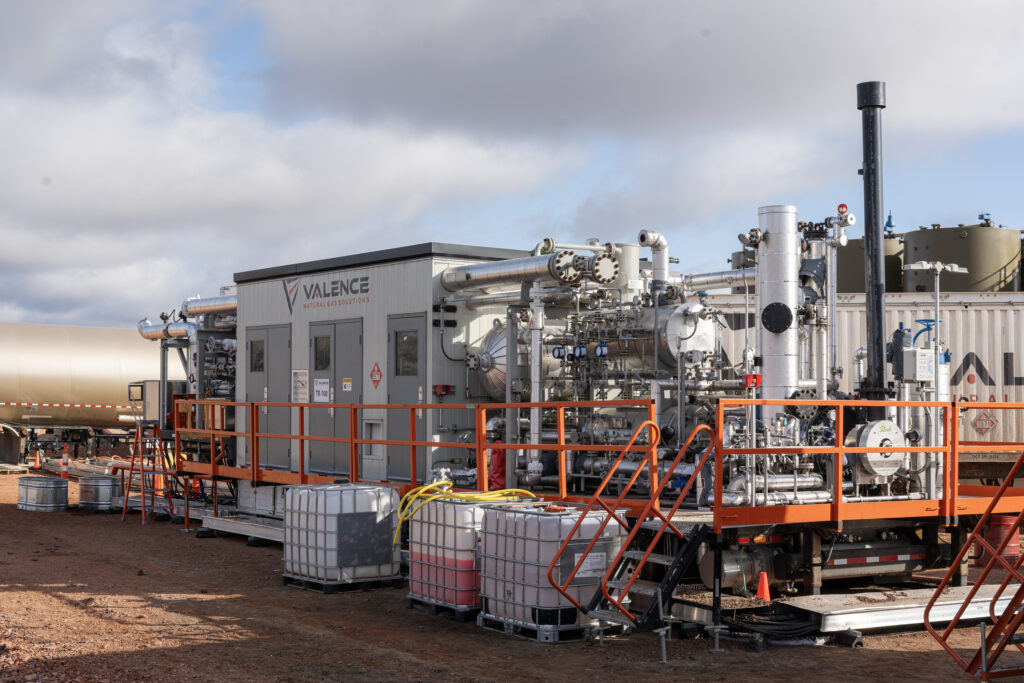

Any high horsepower engine, like those that run drilling rigs, pressure pumping units, heavy-haul trucks, water heaters, trains and even boats, can run off natural gas, which is cleaner and more economical than diesel. As they began building LNG plants in major energy basins, their first customer in the Bakken Shale, Statoil, shared their concerns about flaring. The company was flaring gas less than 10 miles from where they wanted to consume.


At the time, North Dakota was flaring about a third of all the gas that was produced in the Williston Basin. As Wilson explained, “That was over 300 million cubic feet a day. That number got really bad in 2018-2019 at about 600 or 700 million cubic feet a day. That was probably the peak. Then, North Dakota Industrial Commission gas capture mandates ramped up.”


Wilson realized they were on the brink of a revolution for the energy industry. If they could develop the technology to make natural gas processing portable, it would greatly benefit the producer by providing significant environmental benefits and cost savings at the same time. A new product line under Ferus was created and charged with developing a solution that connected the gas that was otherwise flared with that company’s operations.


This sparked a 10-year evolution to commercialize technology that would bring a revolutionary tool to the oil and gas industry.
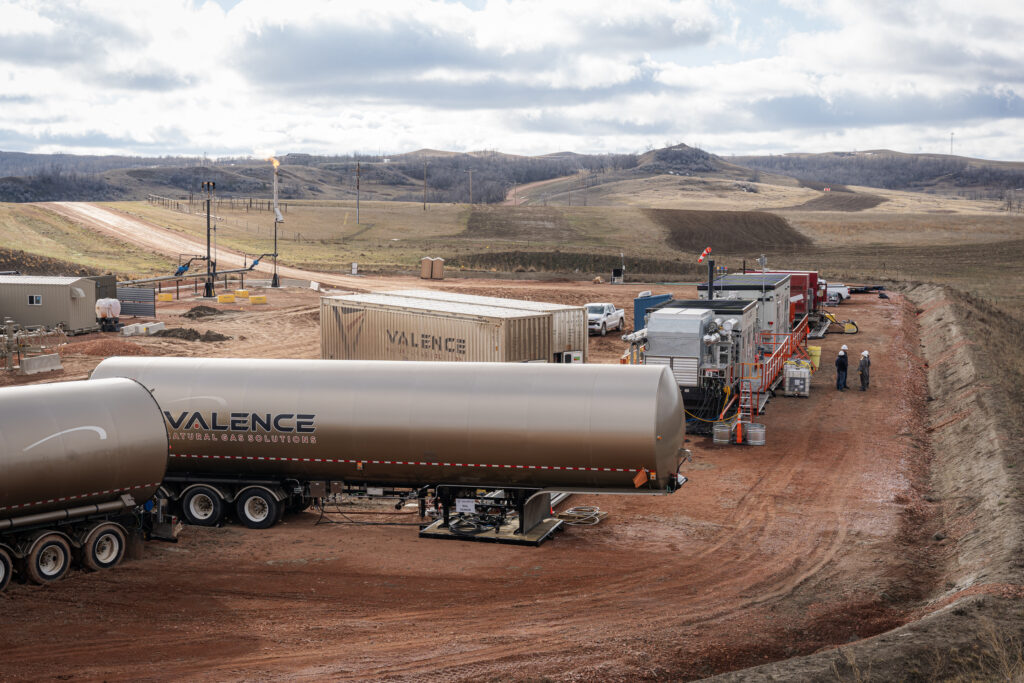

In 2013, Ferus started a business unit solely focused on mobile natural gas infrastructure for the North Dakota market, under Ferus CNG, jointly with partner General Electric who came in as a shareholder and equipment supplier. The business unit focused exclusively on the Bakken and bringing gas capturing technology to market. Fast forward to 2018, when after as Wilson calls it a “whole bunch of learnings,” he and a team of key personnel including, John Vertz who leads Valence’s head of engineering, design and execution, established Valence Natural Gas Solutions with a new investor. Wilson explained, “We decided from the ground up the entirety of what a flare gas capture system needed to be was one cohesive unit designed by us and manufactured under our vision of engineering and fabrication.” The new venture set the stage for them to make the big leap forward.


The team focused on the fact that the standard technology for processing gas was sufficient, but making that process mobile was not. Traditional gas processing technology would be extremely useful if it could be made more mobile to reduce the time and expense to move it from one site to another, down from months or years to a matter of days.


Wilson shared, “The problem that we’ve been laser focused on solving from day one is flaring in North Dakota. Trying to understand it deeply is important to develop a solution. And the big thing we were trying to always ask is, ‘why does flaring occur?’ It’s wasteful. It’s not preferred by operators. Is it just a short-term dislocation in the market that will be solved by traditional midstream over time? We’ve determined that it’s a structural problem that has to do with the mismatch between how fast producers want to drill, complete and bring wells on, the volumes they will produce, and the midstream market’s ability, timelines and risk appetite to move with traditional pipelines and gas processing plants.”


Valence offers a mobile gas processing and flare gas capture solution that is a compliment to gas midstream. Its standard mobile gas plants can move from site to site within seven to 10 days and fill operational gaps while traditional midstreamers are planning infrastructure to connect with producers. Compare that to traditional midstream, which can typically take up to 18 months and multiple permits to plan and construct gas gathering pipelines and processing plants.
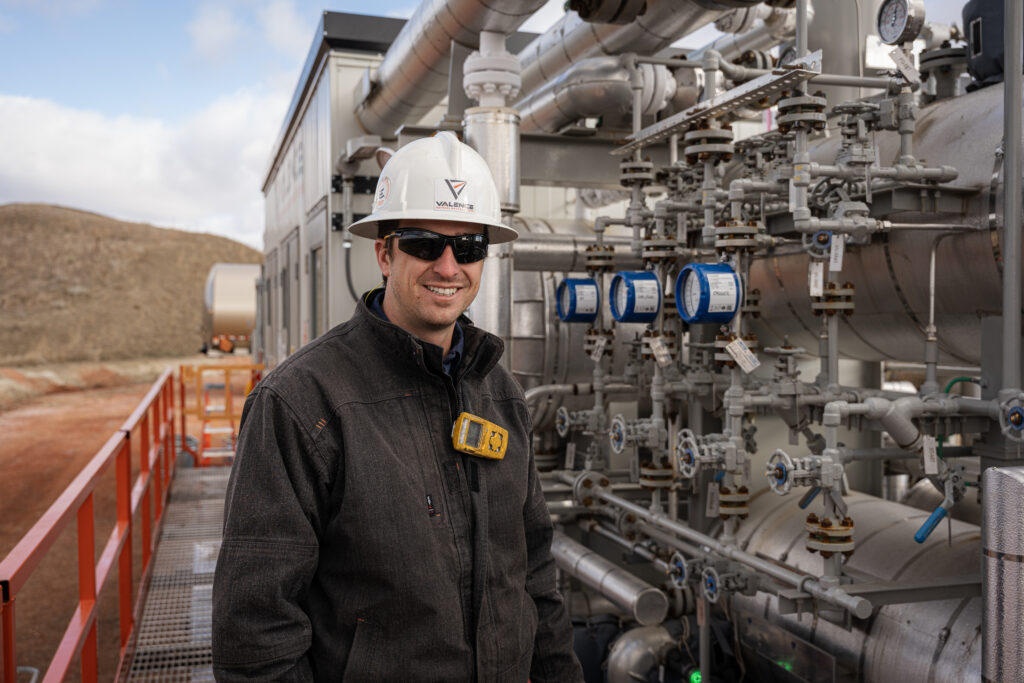

While he said the industry has gotten a lot better at planning, it doesn’t mean flaring has gone to zero, rather it’s about 5% of the gas that’s produced in the Basin today. He added, “It’s still an enormous amount of resource that’s getting flared. For context, that’s probably about as much gas as the entire state of Montana is consuming to heat homes and for industry.”


Valence’s solution could play a key role in helping North Dakota reach its goal to be carbon neutral by 2030. If the medium to large size flares, which are typically from newer wells that come on at really high rates can be captured, then total flaring could be reduced by 60-70%. Valence currently has two different sized plants that allow them to chase these different sized flares.


The other side of Valence’s business is the delivery of CNG for fueling. Its fleet of nearly 80 CNG trucks move natural gas around the basin to any consumer that needs or that wants to use gas. They supply over 80% of the drilling rigs, pressure pumping crews and water heaters that can run on natural gas across the Basin.


Using Valence’s solutions, producers can capture the gas they were otherwise flaring, clean it and send it back to their own operations to be used as a cleaner, more cost-effective fuel. Additionally, at its central terminal located west of Watford City, North Dakota, captured gas that doesn’t have a drilling rig or fueling destination is routed for delivery into pipeline markets, ensuring the beneficial use of all the gas that they capture.
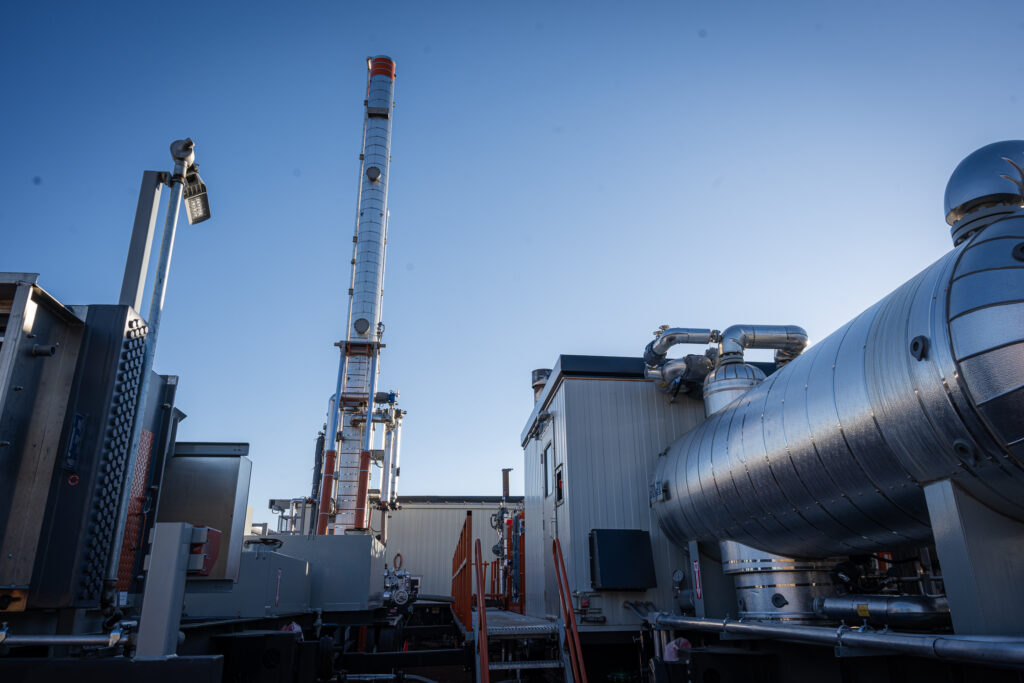

Valence also manages and markets the supply chain for the natural gas liquids, that are byproducts of processing gas in the Bakken, which include propane, butane and pentane. These valuable components come out of a raw molecule of gas that is extracted from the wellhead also otherwise go up in a flare stack when there is no outlet for the gas.


From a sustainability perspective, Valence has the capacity and technology to make waves in the industry. Their work brings tax dollars and jobs to North Dakota and is helping to save natural gas and reduce flares. Wilson explained about the social impact, “Flaring is that visual representation of waste that whenever an article is written focusing on the negatives of the oil and gas industry, it always seems to have a picture of a flare on it. Our work solving the flaring issue creates enormous value, is socially responsible and is important for the reputation of our company, the State, and our industry in general. It’s an extremely important contribution we can make to the energy industry.”
Rainbow Energy Center, LLC

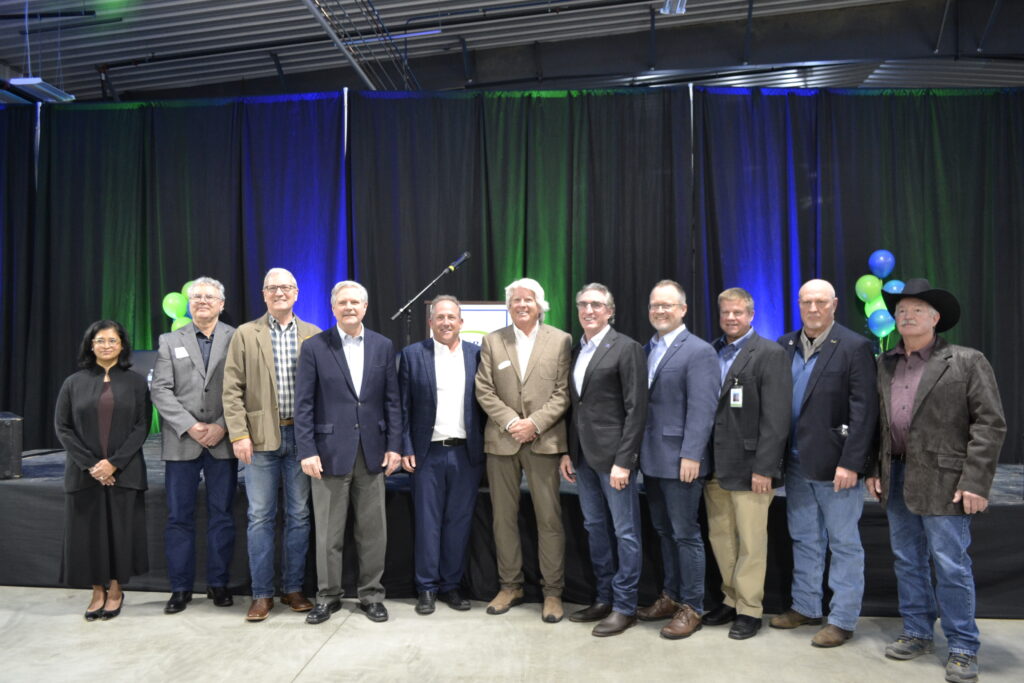
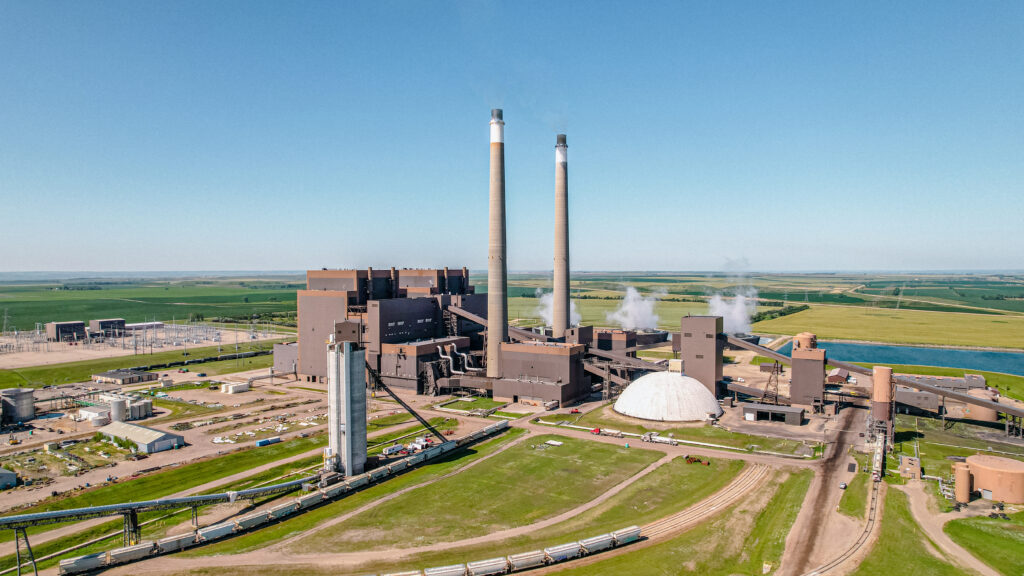
On May 2, 2022, Rainbow Energy Center LLC celebrated the purchase of Coal Creek Station, the state’s largest power plant, from Great River Energy (GRE). GRE, a Minnesota-based company, sold the 1,151-megawatt power plant to Rainbow Energy Center and the associated transmission system, which runs from central North Dakota to Minnesota, to Nexus Line, LLC. Rainbow Energy Center and Nexus Line are both affiliates of the Bismarck-based Rainbow Energy Marketing Corporation.


The sale completes a successful transition for the plant and power line to maintain operations. GRE announced in 2021 that it planned to close the plant which would have displaced 650 workers and had a significant, negative economic impact on the region.


Led by the Office of the Governor, state agencies came together to support the sale of the plant. This included a financing package facilitated through the North Dakota Transmission Authority (NDTA) under the governance of the Industrial Commission. The complex financing package included NDTA selling $150 million of bonds. The proceeds of the bonds were then used to provide a loan to Nexus Line to facilitate the purchase of the High-Voltage Direct Current power line. This is the first time NDTA has issued bonds since it was established in 2007. To provide expertise and guidance, the North Dakota Public Finance Authority assisted in issuing of the bonds.

BND’s role in the transaction was in purchasing NDTA bonds through a Match Program Loan of $150 million. The Match Program supports large-scale economic diversification projects. To access the Match Program, entities must provide evidence of considerable financial strength as demonstrated by a long-term investment grade rating. In this instance, NDTA is an agency backed by the moral obligation of the state which qualified it for a loan.

Rainbow Energy Center, LLC
default

In 2021, House Bill (HB) 1425 was passed by the North Dakota Legislature. It played a critical role in establishing the ingenious financing structure. Under the bill, the State Investment Board (SIB) is allowed to access up to 10% of the principal of the Legacy Fund for fixed rate investments in North Dakota and purchase CDs from BND which provide a market rate of return to the Legacy Fund. These strategies enabled BND to loan the funds at a competitive rate to NDTA.


It is doubtful that any other state could complete such a complex financial transaction to enable the transfer of a coal plant and transmission line from one entity to another. Today, large financial institutions are reluctant to provide loans to entities that use fossil fuel as a source for power generation. As America’s only bank that is owned by a state with a mission of supporting economic development in the state, BND is in a unique position to assist in facilitating this transaction.


In closing, Rainbow Energy Center & Nexus Line President Stacy L. Tschider said, “Our vision was always more than just buying a power plant; this was about preserving a way of life and helping these communities continue to thrive. Without the help and support of the Bank of North Dakota, we would have never been able to push this over the finish line.”

Prairie Pride Foods

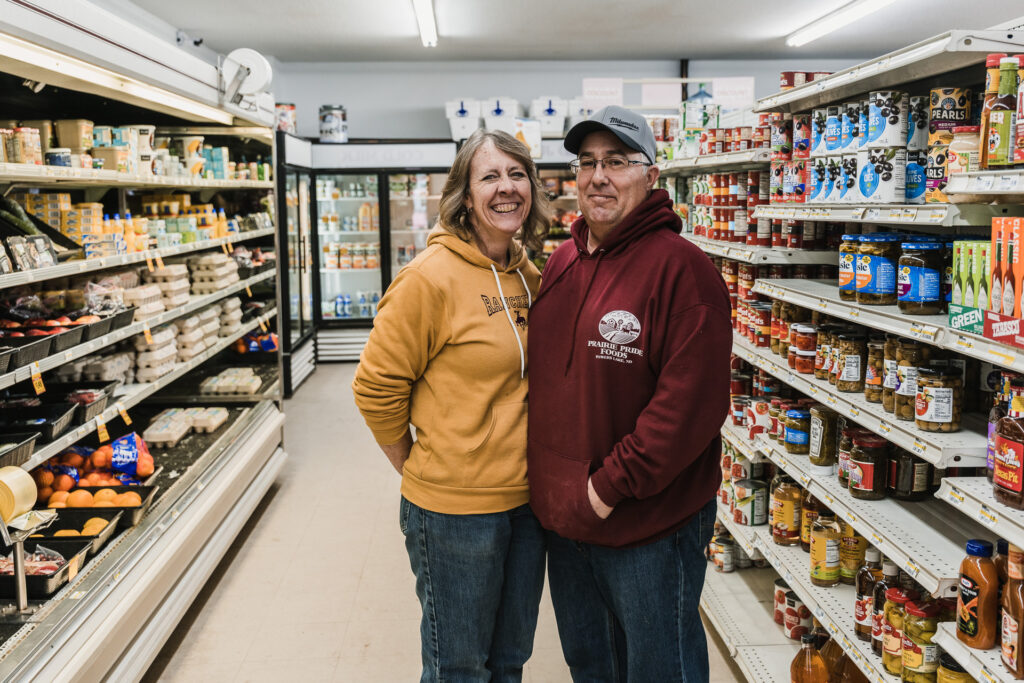
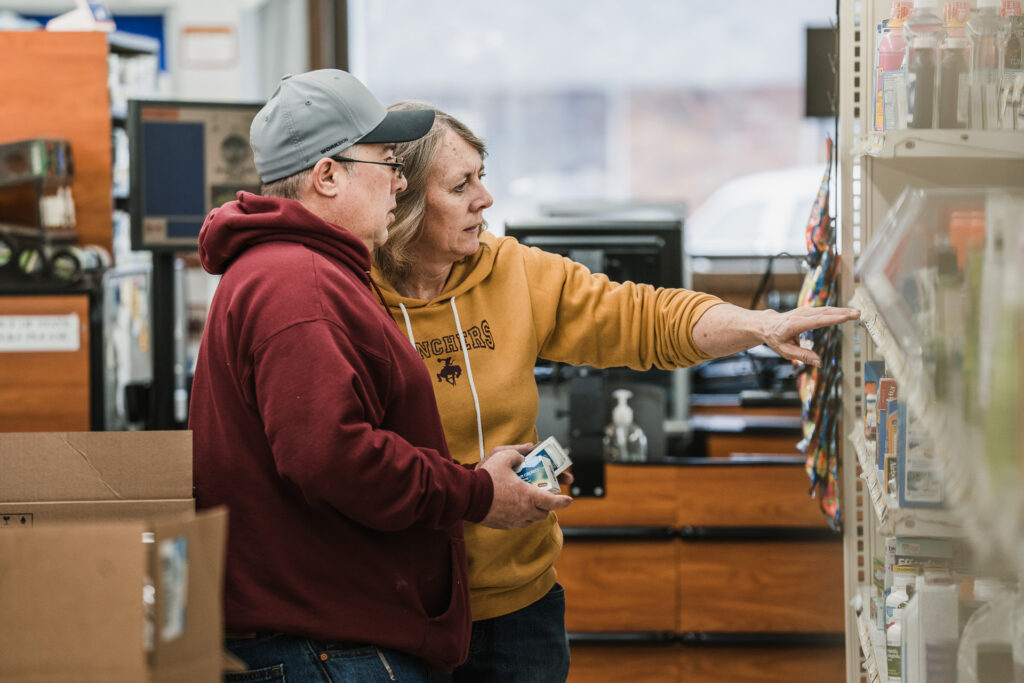
“We knew how vital a grocery store was to the community, because it was one of the reasons why we originally moved to Powers Lake,” shared Connie Olson. When they heard the town’s grocery store was for sale and may close, Connie and her husband, Dustin, stepped up to keep it in the community. Seven years after relocating their family from Wyoming, the Olsons are the owners of Prairie Pride Foods in Powers Lake.


The Olsons originally planned to open a sweets shop and barbecue food cart—two things they are passionate about—when they realized they could incorporate those into the grocery store. After a lot of collaboration with Randy Streifel with Liberty State Bank of Powers Lake, the pieces started coming together.


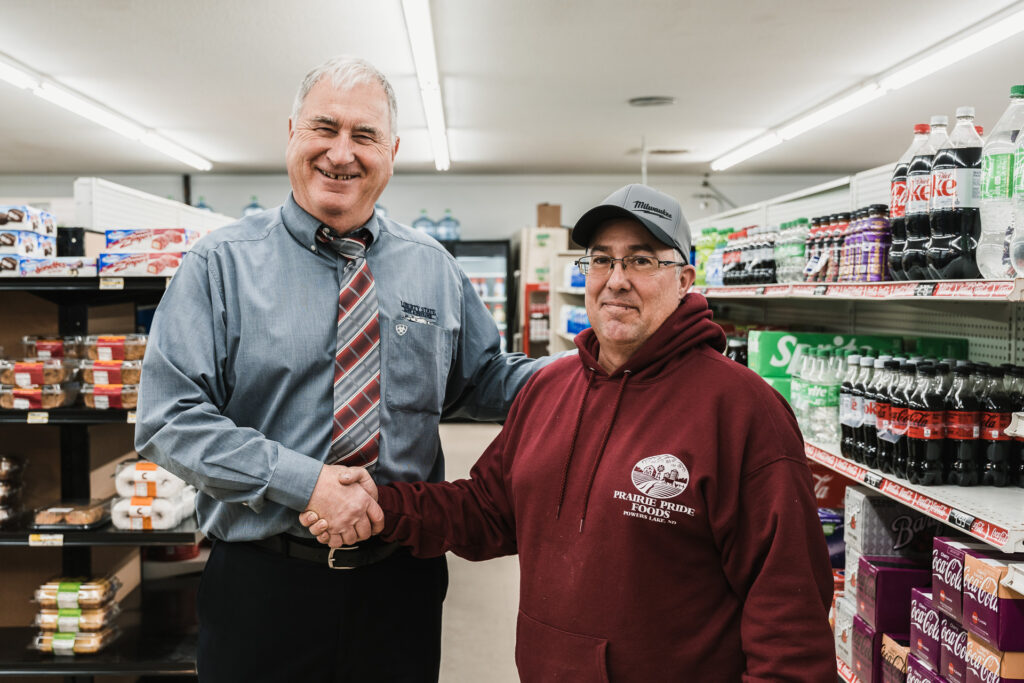
Olson continued, “Randy bent over backward. He really worked hard to find the best deal and did the footwork for us … he understood the importance of us having a grocery store in town.”


Streifel worked with BND Business Banker Jackie Duke to access BND’s Flex PACE Loan, a program that has been utilized for other projects in the community. Streifel explained, “The best parts of it were rates, terms and flexibility. You can buy a loan down to 1% for the city, and the BND loan helps facilitate the buydown.”


To support their local economy, Powers Lake has a one cent sales tax that is put in a fund to help new business ventures, interest buydowns and more. Members of the community and local officials know how critical it is to have essential services like a grocery store.


As Streifel explained, “When you can offer all your services in your community, it helps everybody including the property owners and the housing market. Even local businesses, like we have on our main street, help our schools.”


Duke added, “I believe it’s important for small towns to keep their grocery stores for the health of main street and its elderly residents who would have difficulty traveling 40 or 50 miles to buy groceries. Liberty State Bank’s willingness to work with the Olsons, Powers Lake EDC, the building owner and grocery store supplier was a real team effort to help the community maintain their grocery store, and BND was happy to be a part of it.”


While the Olsons are learning the ropes of running a grocery store, they are strategically planning for the next phases of their business plan. Those stages include introducing more of Connie’s sweet treats and baked goods and Dustin’s barbecue meats. They have already been taking small steps toward these but are focusing on building connections and being financially responsible first.
“When it comes to finances, we have to take this slowly. One step at a time and get it to be a profitable commodity to where people want to come here,” Olson explained. “They realize that there is stuff to buy in the store. We do have some regulars that are very grateful. They thank us for stepping up because they really need a grocery store and they do appreciate that.”

Tots and Tumbling Learning Center, LLC

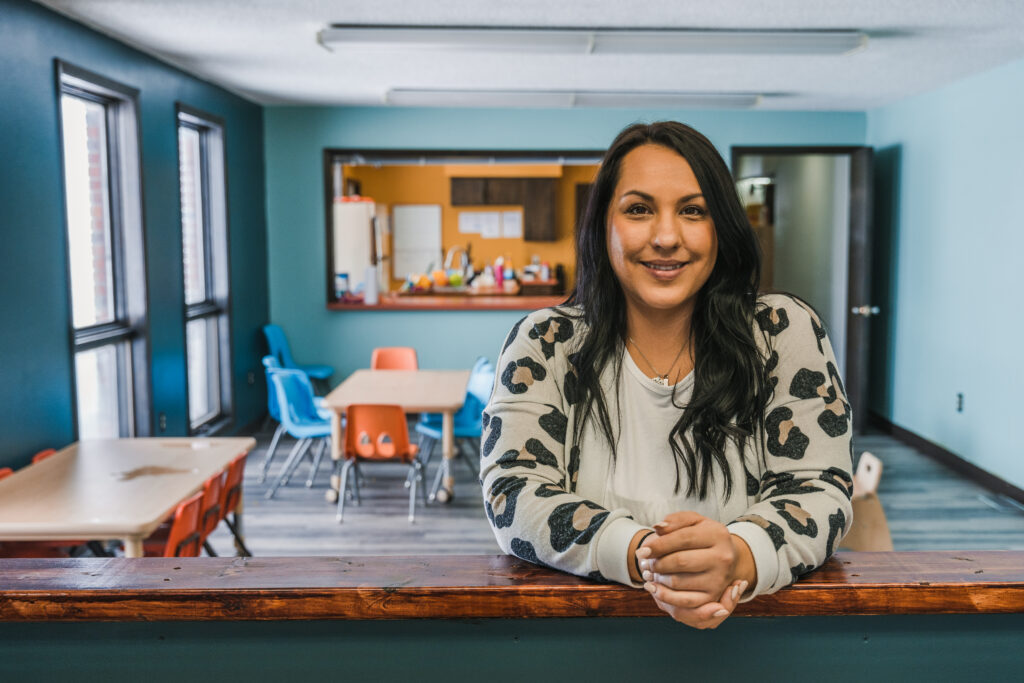
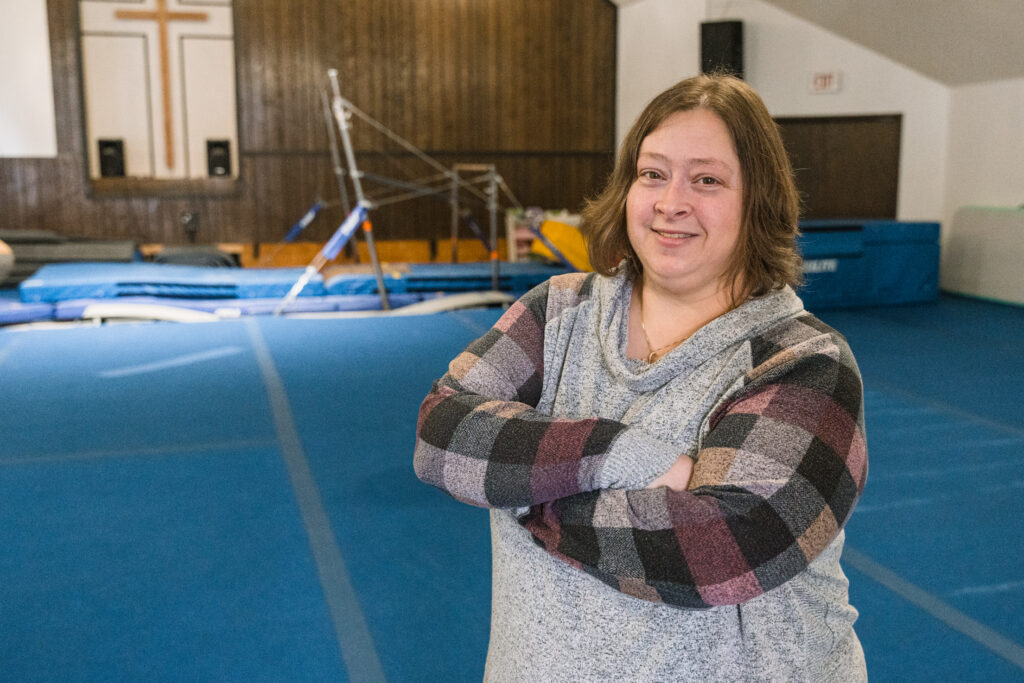
Located in Carrington, Tots and Tumbling Learning Center LLC started with two people having shared interests in fulfilling the needs of their community and repurposing a beloved vacant space.


In 2021, Whitney Carter, who owned childcare centers in New Town and Parshall, made the decision to move “back home” to Carrington. She wanted to fill a community need for more childcare. As her journey began, she stumbled upon a vacant church building. While taking steps toward purchasing the building, Tammy Sorenson presented her with an idea.


Sorenson, who owns and operates Carrington Gymnastics, had always rented space and approached Carter about purchasing the building together. It was an opportunity to invest in their own property rather than paying rent. They formed the Tots and Tumbling Learning Center partnership and purchased the building under the joint venture.


Jay Tweed from Bremer Bank was the local banker who built the financing package that included BND’s Flex PACE Loan.


Carter shared, “For business owners who are just starting and trying to make it, the first two years when you need to include your startup expenses are incredibly costly. The Flex PACE Loan decreased our bank loan by 50%.”


“Utilizing the right funding is a key factor in setting a business up for success. Done correctly, it can allow businesses to grab new opportunities, improve old ones, and provide a safety net for unforeseen circumstances,” Tweed explained. “The interest buydown allowed them to free up additional cash for other areas of the business, such as remodeling the building and additional staffing.”


Purchasing the building allows Carter and Sorenson to build equity while providing needed services in the community. Tweed said, “Prior to opening, there was a shortage of daycare providers in the area, which as a parent of young children myself, I realize how important it was to have a business address that need. The gymnastics program adds another activity people can enjoy, especially during the winter season when outdoor activities are limited.”


BND Business Banker Bruce Schumacher added, “Reliable childcare is a challenge for workforce across the state. BND recognizes this need and utilizes Flex PACE to support providers. It’s great to be able to assist with this project that fills an empty space while providing excellent childcare and healthy activities for families in the community.”


Sorenson’s Carrington Gymnastics is in the middle of the building with Carter’s Milestones Early Learning Center in the classrooms surrounding it. Their partnership successfully brought two community needs, childcare and fitness, into one building—a beloved church that was sitting vacant.


Built in the 1970s, the church served many community members before abruptly closing a few years ago. Carter explained that people will visit the building and share stories of how they used to attend church services or were married there. She said, “They’re so happy that there’s something happening. It’s filled with kids and lots of good memories.”

BND’s 100th Anniversary Celebration with Attorney General Wayne Stenehjem

BND celebrated its 100th anniversary in 2019, and the state’s leaders hailed its impact on the state.

State of Change: The Community of West Fargo

The community of West Fargo shares their growth story and how BND has been integral to supporting business and infrastructure.

  • « Go to Previous Page
  • Page 1
  • Page 2
  • Page 3
  • Page 4
  • Go to Next Page »

Primary Sidebar

Footer

PO Box 5509, 1200 Memorial Hwy.
Bismarck, ND 58506-5509
800.472.2166
701.328.5600
bnd.nd.gov
  • Contact Us
  • Disclaimer
  • Privacy Policy
  • Cookie Policy
  • Photo Credits
  • Facebook
  • YouTube
  • Instagram
  • LinkedIn