• Skip to primary navigation
  • Skip to main content
  • Skip to primary sidebar
  • Skip to footer
The BND Story Logo

The BND Story

  • BND Stories
  • Overview
  • 1915-1919
  • 1920-1949
  • 1950-1989
  • 1990-2019
  • BND Today

Ag Loans

Tronson Grain

“It’s been quite a ride,” said Rick Tronson as he reminisced about his family’s business. Withstanding challenges that included fires, moving a grain elevator from one community to another, strategic growth and market volatility, Tronson Grain has endured. It is set to work with area farmers “today, tomorrow and for years to come.”


The business started in 1942 when Richard Tronson purchased the elevator in Doyon, North Dakota. His investment brought the young family to a new city and unknowingly, was the beginning of a family legacy. Richard’s sons, James and Don, ran the company from the 1950s until the 1980s when they turned it over to Rick and Paul. These two are preparing to turn management over to the fourth generation of Tronsons, Paul’s son Pat Tronson, his son-in-law Jason Huwe, and Rick’s son Tucker Tronson. As Pat Tronson explained, “It’s as family integrated as you can get.”


The Doyon elevator was the sole establishment in the family business until 1989 when they purchased the Tolna elevator. Since then, they’ve expanded, acquiring another elevator, a seed plant and built a fertilizer plant and shuttle loader. This diversification was critical for Tronson Grain to survive the changing times, meet customer needs and compete with larger companies.
Farming has evolved into an industry with increased efficiencies, demanding new ways to deal with its products. Historically, producers farmed fewer acres and hauled crops to elevators by truck. Today, yields have increased, crops are harvested more quickly, and they are hauled to the elevator by semitrucks. Tronson Grain needed to position itself to take in commodities at a faster pace and higher volume, while providing adequate storage.


As Paul Tronson expressed, “Farmers used to take two weeks, three weeks to harvest their corn crop. Today, they do it in half the time, so those bushels come at a faster pace than ever before.”
In 2011, the business received eight to nine million bushels of grain, which took 365 days to haul in 20 semis a day, requiring more storage and limiting the market reach. This prompted the investment in a shuttle facility at their company hub in Doyon. The shuttle elevated the capacity to compete in the market and better serve their customers. Because they can load the grain into 110-car trains, newer and larger markets are accessed. This improves commodity bids and bottom lines for the local producers. Today about 80% of commodities leave the facility by rail with the balance hauled by semitrucks.
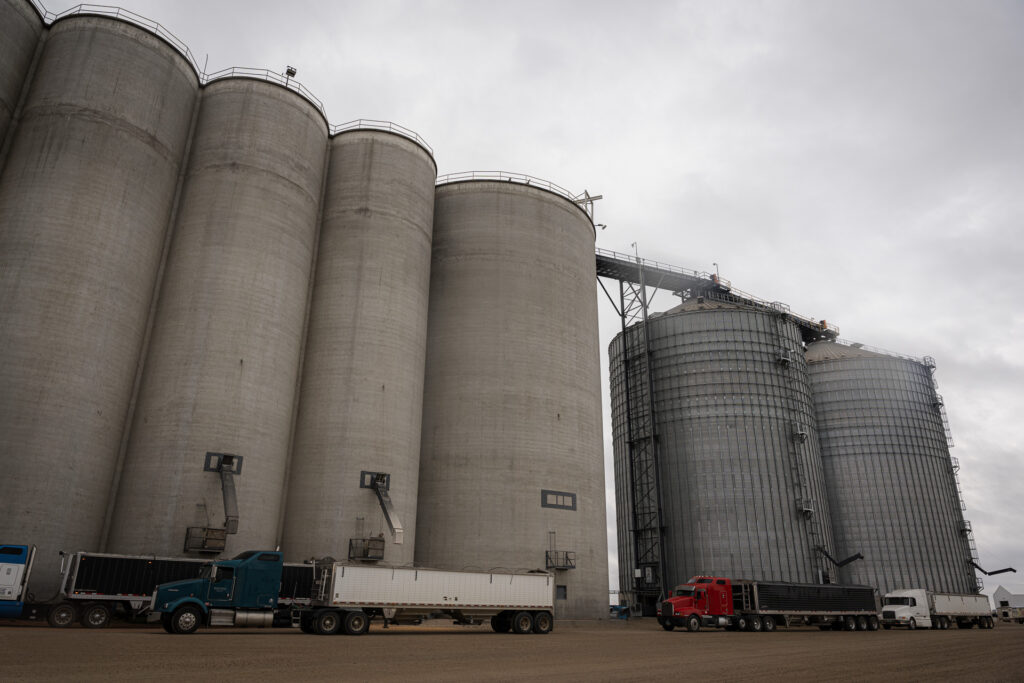

To accommodate the higher volumes and increase control in a volatile market, Tronson Grain continues to expand commodity storage at the Doyon facility, recently adding two bunkers for grain. To ensure the elevators in Garske and Tolna don’t run out of storage, semis feed the rail hub in Doyon. “We try not to ever go full. We take it to Doyon to make room for more,” Rick Tronson explained.


Tronson Grain also owns a seed plant in Lakota, and with the growth in the fertilizer business, recently built a fertilizer storage facility at the Doyon site. To help fund the fertilizer storage project, Tronsons contacted longtime banking partner Bruce Anderson, who is the president of State Bank of Lakota. State Bank of Lakota partnered with First United Bank (formerly Ramsey National Bank) and Bank of North Dakota on the project. Bank of North Dakota’s Commercial Participation Loan program was a good fit.


Anderson explained, “Bank of North Dakota has been excellent to work with. We have partnered with them, along with Bell Bank, for a number of years on Tronson’s annual operating line. As the elevator operation has gotten so much bigger and handles all this grain and crop inputs, their need for credit has exploded. We’re a pretty small bank, so our legal lending limit caps our ability to meet Tronson’s credit needs in house. We have to have these partnerships to help us with that. BND has been an integral partner, and when we called on them for help for the fertilizer plant project, they were there for us.”
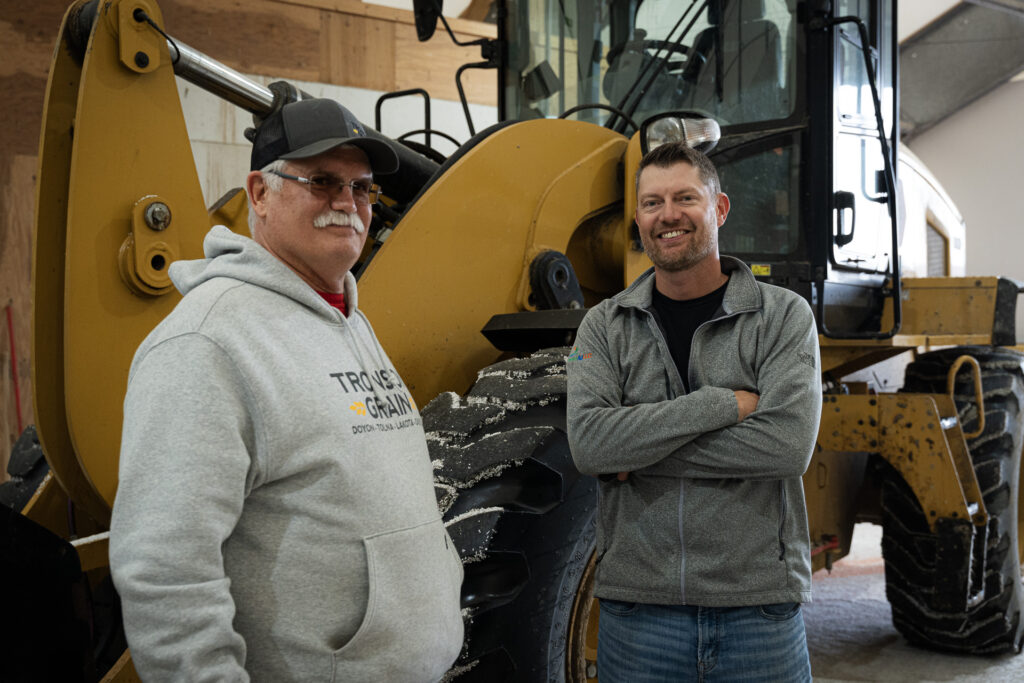

Anderson and his family, who have owned and operated State Bank of Lakota since 1946, have worked with the Tronsons for generations. They understand the ebbs and flows of the business and the importance of having the right funding readily available to protect and support it. Anderson said, “It is a very complex business. There can be a lot of risk in it if the people running the elevator aren’t doing their risk management. But Tronsons manage the hedging of their buying and selling well, and they manage their freight so well that we’re comfortable because they have such a good handle on their business risk.”


“Tronson Grain exemplifies the necessity for business strategy and financing opportunity coming together to ensure long-term viability,” says BND Business Banker Tyson Zeltinger. “It highlights the crucial role of the local lender serving as the conduit for Bank programs because they know their community best.”


The Tronsons recognize the industry and landscape are changing and use their foresight and expertise to remain relevant. They invest in facilities, innovation and technology that allow them to be agile and meet their customers’ needs. As Pat Tronson expressed, “Moving forward with these changes was something we knew would work. Although we were providing the services, we were just getting by with our current infrastructure. Now, we can only get more efficient and grow.”
Dakota Specialty Milling

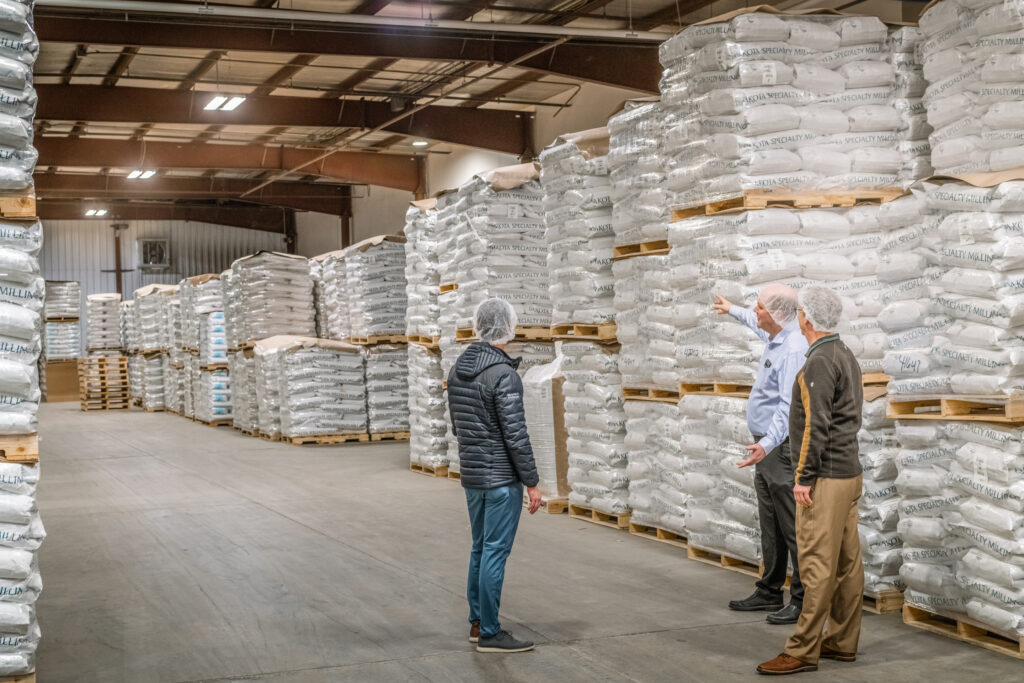
With a history as rich as Red River Valley soil, Dakota Specialty Milling has been owned and operated by the Matthaei family for over 50 years. It continues to grow, invest in the community and be forward-thinking in how they operate and serve their customers.


Grains have been a part of Peter Matthaei’s family dating back to 1686 when his family had a bakery in Marburg, Germany. His family’s passion for baking bread continued through generations. He is the fifth generation in the United States running the family companies.


It progressed when his great grandfather, a baker in Tacoma, Washington, worked with Dr. Robert Jackson to cofound Roman Meal Bread in the 1920s. The company set itself apart by focusing on the health benefits of whole-grain and multigrain breads and grew to be one of the largest in the country.


Then in 1969, they built the first mill in Fargo to support Roman Meal Bread. The proximity to North Dakota State University and local producers, including the North Dakota Mill and Elevator, made it an ideal location. Dakota Specialty Milling eventually turned it into the company’s headquarters. Over time, they have gone from baking and licensing to “focusing on milling, blending and toasting for the wholesale bakery, snack food and cereal manufacturers” around the country and to more than 10 other countries internationally.


Pat McShane with Bank Forward said, “The thing that stands out for me with the organization is they are a family-owned business that has been around forever. You can just tell how passionate and knowledgeable Peter is about the business, about the industry as a whole and about what they’re trying to accomplish.” He added, “They’re a big company, but they have a small company feel because they’re family-owned and do things the right way.”


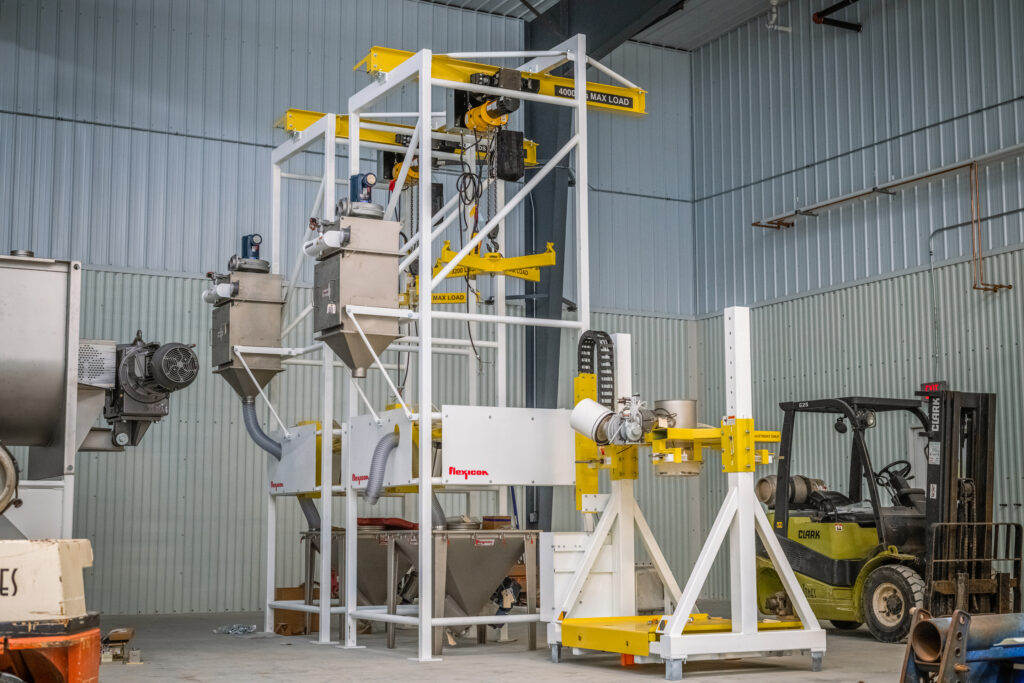
To meet changing customer needs and industry trends, the company continues to invest in their facilities and equipment. In recent years, they added a gluten-free line, completed an overhaul of one of their Fargo mills and are wrapping up an expansion project. The expansion includes replacing and upgrading equipment for their toasting and topping line, adding 40,000 square feet of distribution space and building a new blending line. They will be able to blend baking mixes, concentrates and bases for baked goods along with coatings for fried foods. This previously had been primarily handled at their blending plant in St. Louis, Missouri. With the growth of the business in St. Louis and a large customer demand, it was time to expand that part of the business to Fargo.


The BND PACE Loan and Agriculture Diversification and Development Fund programs helped finance these projects. For their recent expansion project, Dakota Specialty Milling worked with McShane to develop the financing deal along with Joel Erickson, a BND business banker.


“They were looking at a significant expansion to their distribution facility as well as relocating their commercial toasting oven to a different building. Understanding this was going to be a big undertaking, we began looking at programs that could be utilized to help minimize the impact on cash flow,” McShane said. “Working with Joel at BND, we determined the project was eligible for the PACE program and the new Agriculture Diversification and Development Fund for additional interest buydown.”


Erickson added, “Bank Forward, BND and the Fargo/Moorhead Economic Development Corporation worked closely to assist Dakota Specialty Milling in funding their expansion. BND is proud of our strong relationships with North Dakota financial institutions and communities.”
The additions and upgrades Dakota Specialty Milling invested in will provide more efficiency, safety and automation. Matthaei expressed, “With the current labor challenges, we are excited with our new equipment, that employees will be safer and more efficient with their time at work. Continuing to invest in these areas is critical to our growth moving forward, both in terms of attracting talent and competing on the world stage.”


Dakota Specialty Milling was also able to utilize North Dakota’s Automation Tax Credit. This incentive allows a primary sector business an income tax credit of up to 20% of the cost of the machinery and equipment when it replaces a manual manufacturing process and improves job quality or output.


In the long run, Dakota Specialty Milling’s projects will help them grow their blending and toasting business, be more competitive in the commodity markets and offer a broader range of products. It will be easier for them to overcome capacity constraints and meet customer demands.


Erickson reflected, “Dakota Specialty Milling is a long-standing business in Fargo. This expansion was a perfect fit for the PACE Program and Agriculture Diversification and Development Fund. Not only will these programs help the company finance their expansion with interest buydown, but the increase in plant capacity will also result in the purchase of more agricultural commodities from North Dakota producers. Because of that, the economic impact will be felt beyond the city of Fargo.”

Farmers Choice Seed

Farmers have numerous challenges when it comes to producing a successful crop. Certainly, not all things are under their control, but choosing quality seed is one they can.
Steve Knorr and Billy Johnson paired their passions for farming to “bring value to their friends, family and neighbors” when they started Farmers Choice Seed in 2018. With Knorr’s sales background and in-depth knowledge of quality seed and Johnson’s ability to clean and treat soybeans, the two have established a highly respected business.


Farmers Choice Seed offers a full range of services including quality seed, fertilizer, crop protection, a network for growers and distributors, and agronomy services. Local producers have an opportunity to enhance their nonfarm income by selling their crops through dealer farmers/agents within its network.


Since its beginning, Farmers Choice Seed has experienced year-over-year growth in both its business portfolio and workforce. It started with one full-time employee and now has six full-time, permanent employees and five to seven seasonal employees.


This tremendous growth meant their farmsteads could no longer support their business needs, so they worked with their local banker James Moen from Peoples State Bank of Velva (PSB) to creatively finance a project to construct two facilities. One of the facilities is north of Minot along Highway 83 near Forfar, and the other is west of McClusky, along Highway 200.


To execute the “best” possible financing terms, PSB partnered with Bank of North Dakota (BND) to utilize the Flex Partnership in Assisting Community Expansion (PACE) program. The financing package came together through the support of Souris Basin Planning Council, Lewis & Clark Development Group, PSB, BND and the local communities of Lansford and McClusky.


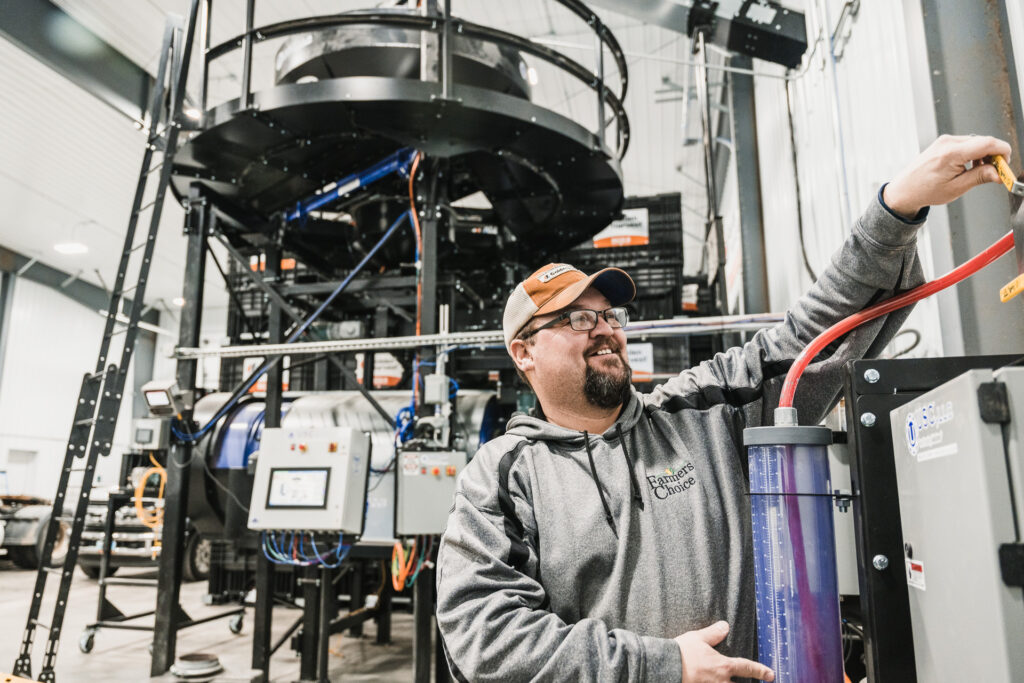
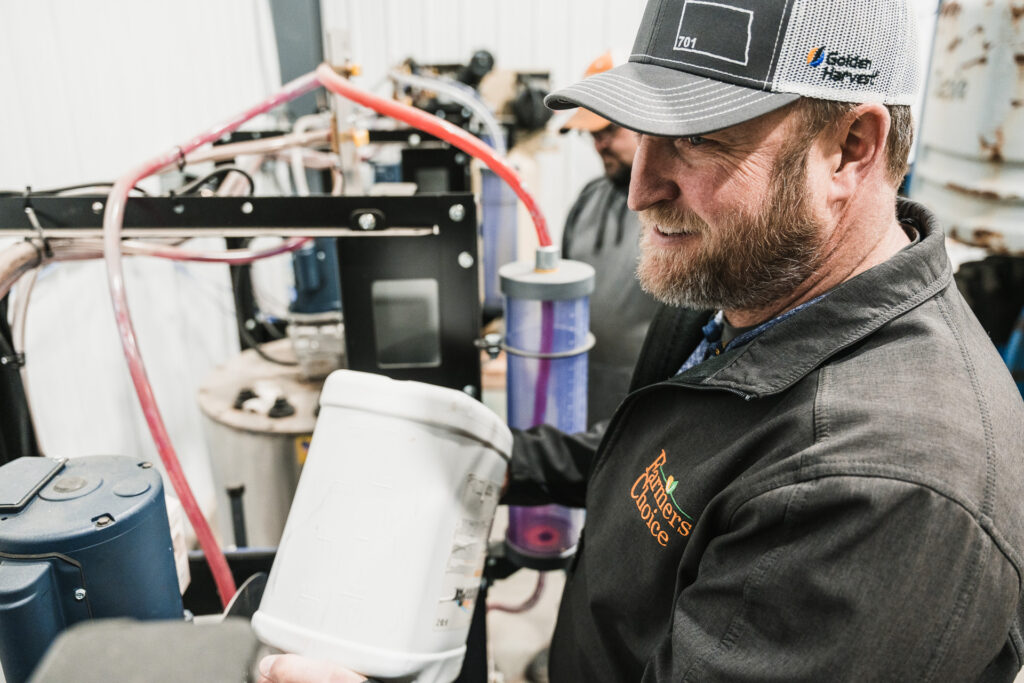
From a production perspective, Knorr explained the new facilities allow them to treat soybeans and hold corn boxes. Banker James Moen added, “With updated facilities, they will be able to grow their business while providing timely, high-quality service to their customers.”


Moen worked with Jim Leier and Michael Lehn from BND to access the Flex PACE funding for this project and appreciated their responsiveness. PSB has partnered with BND to share in the financing of other projects for agribusinesses and ag producers.


“I have worked closely with Jim Moen of PSB for a number of years with various BND loan programs and customers. When he called to visit on this deal, I steered the conversation to the Flex PACE Program because that is a perfect fit,” said BND Business Banker Jim Leier. “What makes this deal unique is the two locations over 100 miles apart. Their partnership with Elizabeth Calderon of Souris Basin Planning Council in Minot and Matt Burthold of Lewis & Clark Development Group of Mandan provided the community share of the buydown interest needed to match BND’s buydown interest.”


Farmers Choice Seed is one example of a growing value-added agriculture industry business in North Dakota. The ability to combine different financing resources is a key to their success, and the success of other new ventures in the state.

  • « Go to Previous Page
  • Page 1
  • Page 2

Primary Sidebar

Footer

PO Box 5509, 1200 Memorial Hwy.
Bismarck, ND 58506-5509
800.472.2166
701.328.5600
bnd.nd.gov
  • Contact Us
  • Disclaimer
  • Privacy Policy
  • Cookie Policy
  • Photo Credits
  • Facebook
  • YouTube
  • Instagram
  • LinkedIn