“It’s been quite a ride,” said Rick Tronson as he reminisced about his family’s business. Withstanding challenges that included fires, moving a grain elevator from one community to another, strategic growth and market volatility, Tronson Grain has endured. It is set to work with area farmers “today, tomorrow and for years to come.”
The business started in 1942 when Richard Tronson purchased the elevator in Doyon, North Dakota. His investment brought the young family to a new city and unknowingly, was the beginning of a family legacy. Richard’s sons, James and Don, ran the company from the 1950s until the 1980s when they turned it over to Rick and Paul. These two are preparing to turn management over to the fourth generation of Tronsons, Paul’s son Pat Tronson, his son-in-law Jason Huwe, and Rick’s son Tucker Tronson. As Pat Tronson explained, “It’s as family integrated as you can get.”
The Doyon elevator was the sole establishment in the family business until 1989 when they purchased the Tolna elevator. Since then, they’ve expanded, acquiring another elevator, a seed plant and built a fertilizer plant and shuttle loader. This diversification was critical for Tronson Grain to survive the changing times, meet customer needs and compete with larger companies.
Farming has evolved into an industry with increased efficiencies, demanding new ways to deal with its products. Historically, producers farmed fewer acres and hauled crops to elevators by truck. Today, yields have increased, crops are harvested more quickly, and they are hauled to the elevator by semitrucks. Tronson Grain needed to position itself to take in commodities at a faster pace and higher volume, while providing adequate storage.
As Paul Tronson expressed, “Farmers used to take two weeks, three weeks to harvest their corn crop. Today, they do it in half the time, so those bushels come at a faster pace than ever before.”
In 2011, the business received eight to nine million bushels of grain, which took 365 days to haul in 20 semis a day, requiring more storage and limiting the market reach. This prompted the investment in a shuttle facility at their company hub in Doyon. The shuttle elevated the capacity to compete in the market and better serve their customers. Because they can load the grain into 110-car trains, newer and larger markets are accessed. This improves commodity bids and bottom lines for the local producers. Today about 80% of commodities leave the facility by rail with the balance hauled by semitrucks.
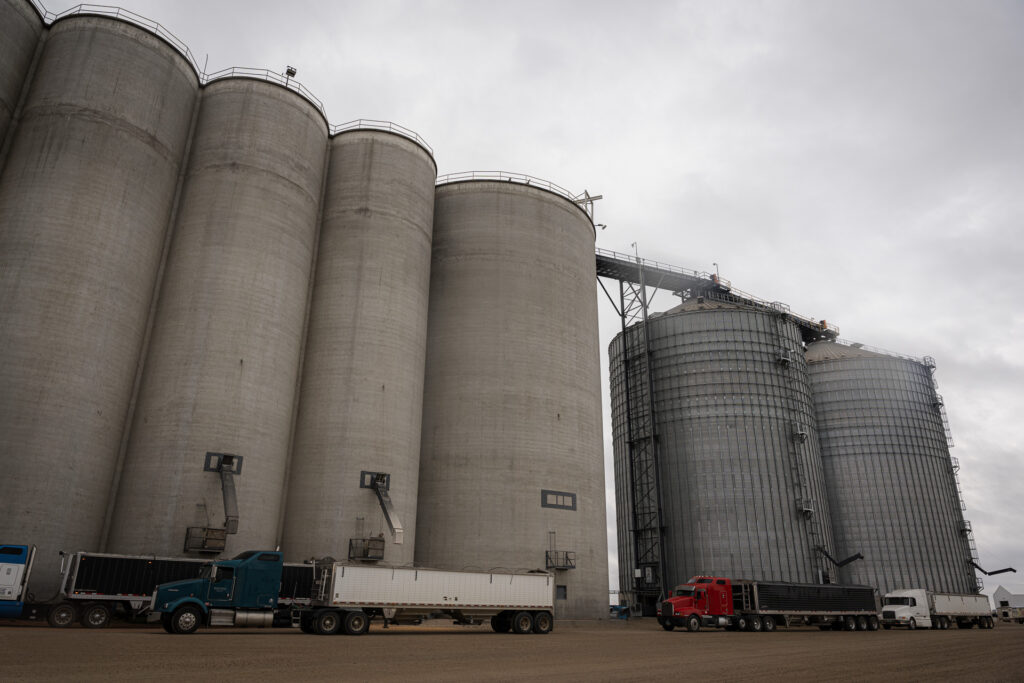
To accommodate the higher volumes and increase control in a volatile market, Tronson Grain continues to expand commodity storage at the Doyon facility, recently adding two bunkers for grain. To ensure the elevators in Garske and Tolna don’t run out of storage, semis feed the rail hub in Doyon. “We try not to ever go full. We take it to Doyon to make room for more,” Rick Tronson explained.
Tronson Grain also owns a seed plant in Lakota, and with the growth in the fertilizer business, recently built a fertilizer storage facility at the Doyon site. To help fund the fertilizer storage project, Tronsons contacted longtime banking partner Bruce Anderson, who is the president of State Bank of Lakota. State Bank of Lakota partnered with First United Bank (formerly Ramsey National Bank) and Bank of North Dakota on the project. Bank of North Dakota’s Commercial Participation Loan program was a good fit.
Anderson explained, “Bank of North Dakota has been excellent to work with. We have partnered with them, along with Bell Bank, for a number of years on Tronson’s annual operating line. As the elevator operation has gotten so much bigger and handles all this grain and crop inputs, their need for credit has exploded. We’re a pretty small bank, so our legal lending limit caps our ability to meet Tronson’s credit needs in house. We have to have these partnerships to help us with that. BND has been an integral partner, and when we called on them for help for the fertilizer plant project, they were there for us.”
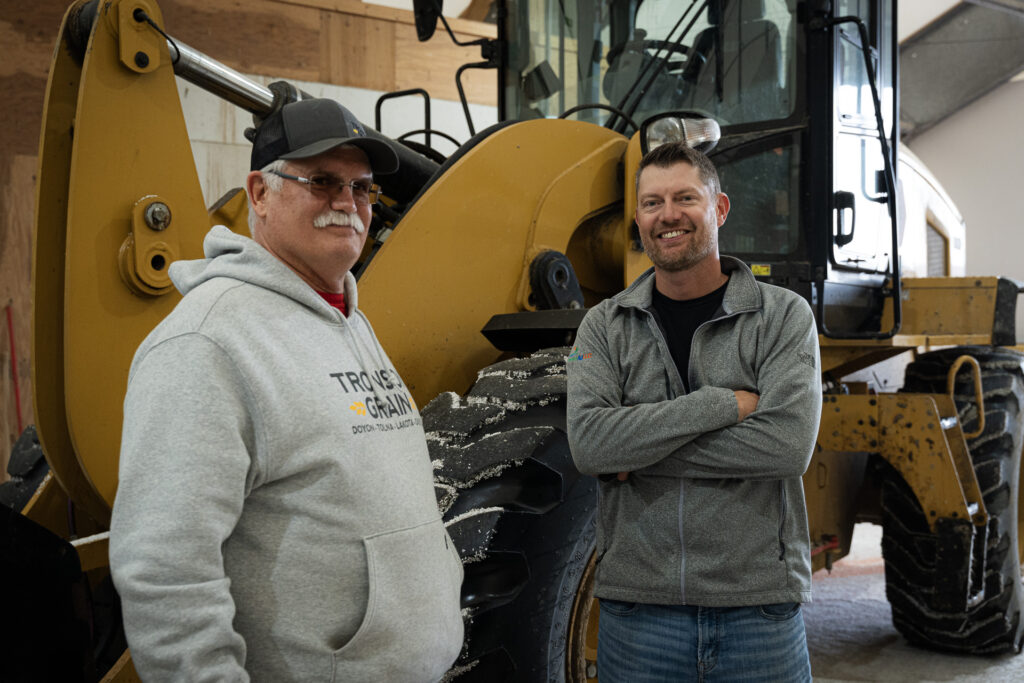
Anderson and his family, who have owned and operated State Bank of Lakota since 1946, have worked with the Tronsons for generations. They understand the ebbs and flows of the business and the importance of having the right funding readily available to protect and support it. Anderson said, “It is a very complex business. There can be a lot of risk in it if the people running the elevator aren’t doing their risk management. But Tronsons manage the hedging of their buying and selling well, and they manage their freight so well that we’re comfortable because they have such a good handle on their business risk.”
“Tronson Grain exemplifies the necessity for business strategy and financing opportunity coming together to ensure long-term viability,” says BND Business Banker Tyson Zeltinger. “It highlights the crucial role of the local lender serving as the conduit for Bank programs because they know their community best.”
The Tronsons recognize the industry and landscape are changing and use their foresight and expertise to remain relevant. They invest in facilities, innovation and technology that allow them to be agile and meet their customers’ needs. As Pat Tronson expressed, “Moving forward with these changes was something we knew would work. Although we were providing the services, we were just getting by with our current infrastructure. Now, we can only get more efficient and grow.”